
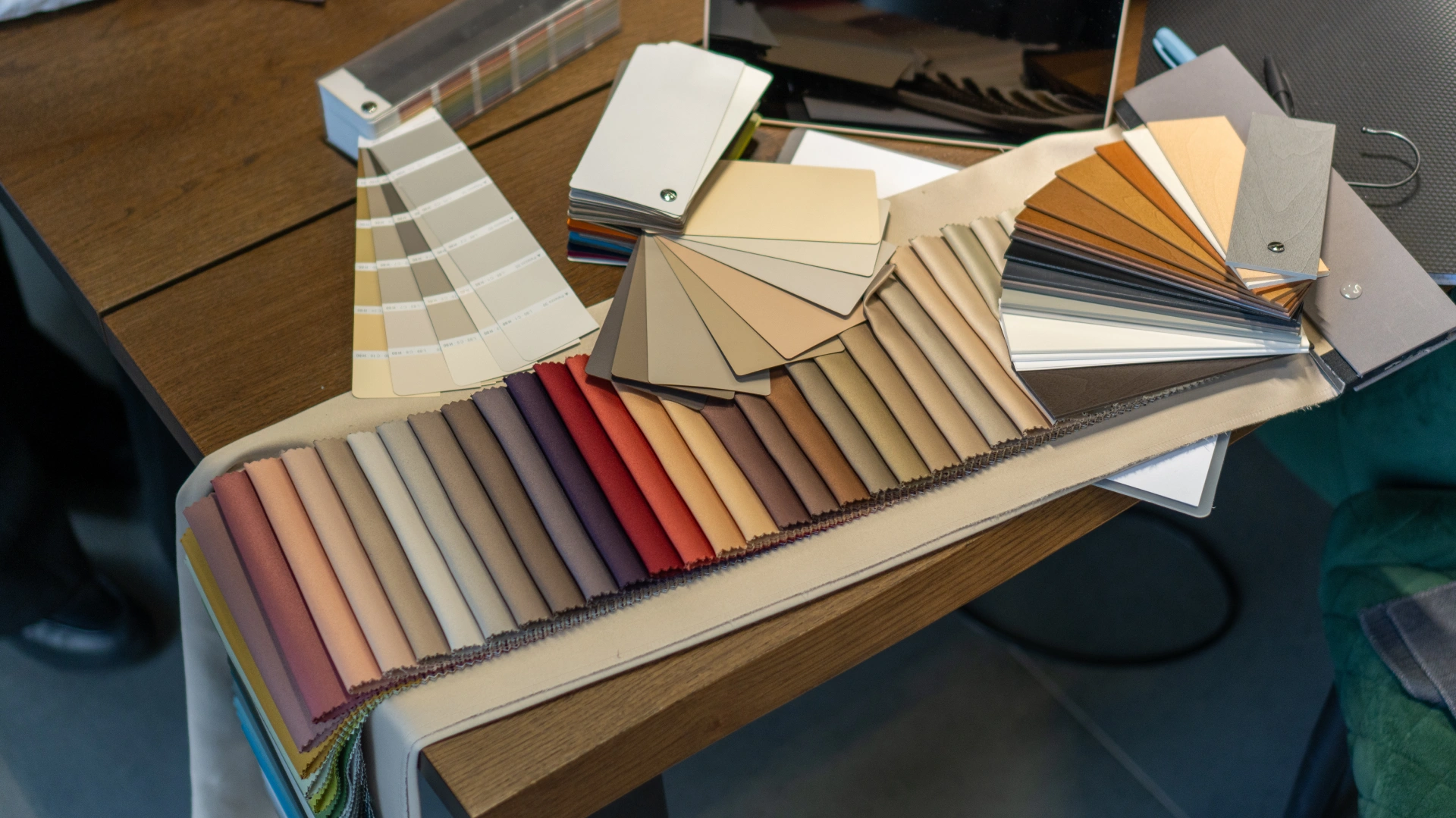
Linen and cotton feel right in sheltered, inland-facing rooms, velvet earns its keep away from direct coastal sun, and synthetic and blended weaves are the safest bet on exposed windows that face the water.
If you’re standing in front of a stack of swatches trying to picture them against Central Coast light, or you’re weighing up linen against a synthetic blend before you book your in-home measure and quote, this is the guide to read first. Bryn has been fitting curtains from Wagstaffe to Wyoming since 1986, and the fabric conversation comes up on almost every visit. Some fabrics that look wonderful in a Sydney showroom struggle within eighteen months on a west-facing window in Copacabana. Others that seem plain on the sample card turn out to be exactly right once they’re hanging in a Terrigal living room. This guide walks through the four fabric families Central Coast homeowners ask about most, honestly, room by room.
What makes a curtain fabric right for a Central Coast home?
A fabric earns its place on the Coast on three things: how it copes with salt-laden air, how it copes with direct UV, and how it copes with the humidity swings between a still January afternoon and a damp July morning. Inland, a fabric only has to look good and last. On the Coast, it also has to survive the weather that comes with the view.
Two variables decide most of the outcome for any given window: how many hours of direct sun it gets, and how exposed it is to onshore wind and salt spray. A north or west-facing window on an exposed frontage in Macmasters Beach needs a different fabric to a shaded, north-east window set back from the water in Erina. Naming those two variables before you choose a fabric saves a remake down the track.
How does linen handle the coastal climate?
Linen is a natural fibre with a relaxed, textured drape, and it is at its best in rooms that are sheltered from direct salt air. It breathes well in humidity, which suits the Coast’s sticky summer months, and it takes dye beautifully, giving it a soft, slightly uneven colour that reads as considered rather than mass-produced.
The trade-off is UV sensitivity. Untreated linen left on a west-facing window that gets hard afternoon sun will fade and weaken faster than a treated synthetic in the same spot. Linen suits living rooms and bedrooms that get filtered or morning light more than it suits an exposed, full-sun waterfront window. It also creases readily, which some homeowners like as part of the look and others find high-maintenance.
Is cotton a practical choice this close to the water?
Cotton is the most familiar curtain fabric for a reason. It is affordable relative to linen and velvet, it washes and cares for itself reasonably well, and it comes in the widest range of weights and weaves, from a light voile through to a heavier cotton twill suited to a blockout lining.
Like linen, cotton is a natural fibre and shares its UV limitations. A lightweight cotton on a bright, unshaded window will lose colour faster than a heavier weave or a treated fabric. Cotton performs best in rooms that get moderate light, such as a hallway, a study, or a bedroom that isn’t in full afternoon sun. It’s a sound, sensible choice for most of a Central Coast home; it’s the exposed, water-facing rooms where it starts to struggle.
Where does velvet actually work on the Coast?
Velvet is the heaviest and most insulating of the four fabric families here, and it has real practical value in a coastal home: a lined velvet curtain does more to block draughts and hold warmth in a room than any of the lighter weaves. It also blocks light well, which makes it a strong choice for a media room or a main bedroom.
Humidity is the thing to watch. In a poorly ventilated, damp-prone room, a heavy velvet can hold moisture and take longer to dry out after a run of wet Coast weather, which isn’t ideal. Velvet works best in rooms with reasonable airflow and away from direct salt exposure, such as a formal living room set back from the water or a bedroom on the leeward side of the house rather than facing straight into onshore wind.
What are synthetic and blended curtain fabrics, and when do they earn their place?
Synthetic fabrics and fabric blends (a cotton-polyester mix, for example, or a polyester voile) are engineered specifically to solve the two problems the natural fibres struggle with: UV fade and salt exposure. A UV-stabilised synthetic on a west-facing window will hold its colour long after an untreated natural fibre in the same spot has started to bleach.
This is the fabric family Adek reaches for most often on the exposed, water-facing windows across the priority coastal suburbs: Avoca Beach, Killcare, Wamberal, Hardys Bay. Verosol, one of the fabric ranges Adek works with, is built around exactly this kind of UV-rated, coastal-appropriate performance fabric. Synthetic and blended fabrics won’t replace the texture of a natural linen in a sheltered inland room, but on a window that takes the full brunt of Central Coast weather, they are usually the more sensible choice.
Which fabric holds up best against salt air, humidity and UV?
Here’s how the four fabric families compare across the factors that actually decide how long a curtain lasts on the Coast.
| Fabric | UV / fade resistance | Salt air tolerance | Best light level for the window | Typical rooms |
|---|---|---|---|---|
| Linen | Low to moderate untreated | Moderate | Filtered or morning sun | Living rooms, bedrooms set back from the water |
| Cotton | Low to moderate untreated | Moderate | Filtered to moderate | Hallways, studies, sheltered bedrooms |
| Velvet | Moderate (heavier weave helps) | Low in damp, poorly ventilated spots | Any, but needs airflow | Media rooms, main bedrooms, formal living |
| Synthetic / blended | High, especially UV-stabilised ranges | High | Full sun, exposed, water-facing | Waterfront living rooms, west-facing windows |
Which fabric suits which room?
A few patterns come up again and again on the Coast:
- Waterfront living rooms with picture windows generally do best in a synthetic or blended weave, because they take the most direct sun and salt exposure of any room in the house.
- Main bedrooms usually want a heavier fabric for light control and warmth, which points to a lined velvet or a heavier cotton, provided the room has decent airflow.
- Sheltered, inland-facing living areas are where linen and lighter cotton genuinely shine, because the UV exposure that limits them elsewhere isn’t a factor.
- Media rooms and home theatres want maximum blockout and minimum light bleed, which is a job for a heavier, lined fabric rather than a light natural weave.
- Hallways and studies rarely need to fight the weather, so this is where a lighter cotton or linen can be used freely without the coastal caveats applying.
What we would not recommend
We wouldn’t recommend an untreated, lightweight linen or cotton on a full-sun, west-facing waterfront window. It will look wonderful for the first year and noticeably faded by the third. If the light and the exposure at your address genuinely call for a lighter, more textured fabric, the honest answer is to add a UV-rated lining rather than run the fabric unprotected, or to reserve that fabric for a more sheltered window elsewhere in the house.
We also wouldn’t recommend choosing a fabric purely from a small swatch. Central Coast light behaves differently to a showroom light box, and a colour that looks neutral indoors can shift noticeably once it’s hanging against an ocean view. Taking a larger sample home and living with it against the actual window for a few days, rather than deciding on the spot, avoids most of the regret we hear about from other installers’ customers.
How do you choose, room by room?
Start with the two variables from earlier: sun exposure and salt exposure. A window that scores high on both, typically anything with an uninterrupted water view, points towards a synthetic or blended fabric. A window that scores low on both, tucked away, filtered light, points towards linen or a lighter cotton. Everything in between is where velvet, heavier cotton, and lined options come into their own.
This is exactly the kind of decision Bryn works through on the curtains he makes for Central Coast homes, fabric by fabric, before anything is cut. It also shapes how the curtain hangs once the fabric is chosen: a heavier velvet behaves differently on an S-fold track than a light linen on an eyelet rod, and it’s worth thinking about both decisions together rather than one after the other.
Fabric choice also affects a home’s thermal performance, not just its appearance. The Australian Government’s guidance on how window coverings affect a home’s energy use is a useful independent reference if you want to weigh fabric weight against heating and cooling costs before you decide.
Talk to Bryn before you choose
None of this needs to be decided from a sample card at the kitchen table. Bryn will bring a proper set of swatches to your home, hold them against your actual windows in your actual light, and tell you honestly if a fabric you’ve fallen for won’t cope with the exposure at your address.
Adek has been making and installing curtains on the Central Coast since 1986. One long-time customer, Julie K, put it simply in her Google review: “I had my bedroom curtains made by Adek over 13 years ago. The quality has stood the test of time.” That’s the standard every fabric recommendation in this guide is measured against. If you’d like Bryn to look at your windows and talk through what will actually last, book an in-home measure and quote and take it from there, no pressure, no obligation to decide on the day.